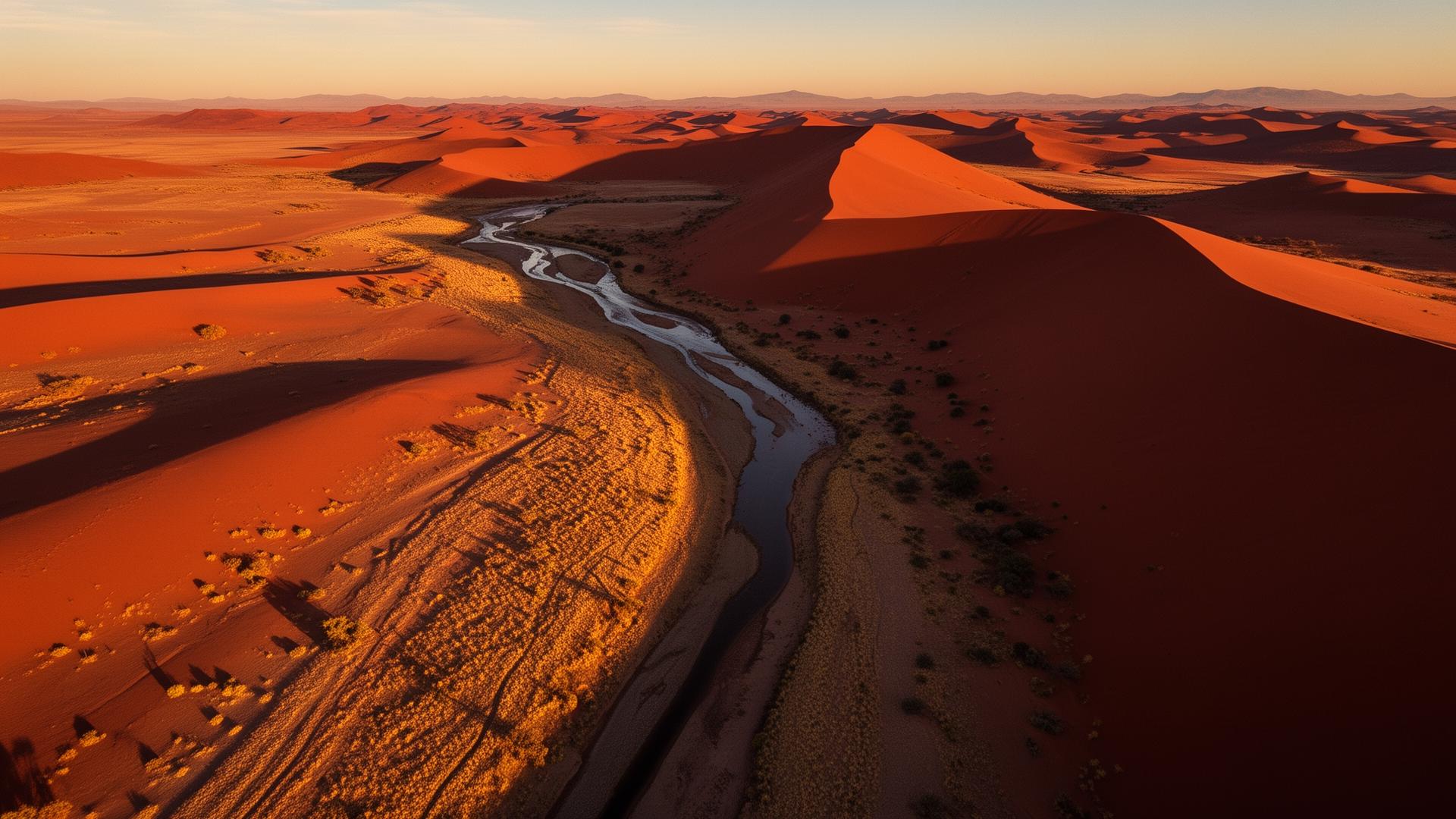

For peak dry-season trips, the strongest versions of a Namibia itinerary are usually built 9–12 months ahead — not because everything is impossible later, but because a handful of route-shaping nights quietly disappear first. Those are almost always your Etosha in-park nights and your Sesriem / Sossusvlei access nights; once those are fixed, the rest of the trip normally falls into place.
On this page8How early is ‘early enough’? · Why Etosha and Sossusvlei move the route …
- 1.How early is ‘early enough’?
- 2.Why Etosha and Sossusvlei move the route
- 3.Etosha: a small in-park stock that everyone wants
- 4.Sossusvlei / Sesriem: book for access, not just a nice room
- 5.For campers, the pressure is even sharper
- 6.Nights that can usually stay flexible
- 7.If you are already booking late
- 8.A practical booking order for a first Namibia trip
How early is ‘early enough’?
Namibia has a very clear travel rhythm. The core dry season — roughly June to October, with a particularly busy bulge in July and August — is when Etosha’s waterholes are at their best and Sossusvlei’s mornings are cool enough to be comfortable on the dunes. That is also when both parks see the most demand and when in-park beds and gate-adjacent sites tend to sell out first.
If you want the strongest version of a July or August trip, aim to have the key nights booked 9–12 months ahead. That does not mean every lodge in the country is gone a year out. It means the small cluster of nights that control access — Etosha inside-park, Sossusvlei inside-park and near-gate stock — are being chased by everyone on roughly the same dates.
Outside the dry-season core, you can usually book later. The hot, wetter months see fewer visitors overall, but heat and storm risk around Sossusvlei and Etosha mean you should be more careful about road conditions and vehicle choice instead of availability.
- Peak season, best-case version: try for 9–12 months ahead.
- Pressure-point nights (Etosha in-park, Sesriem / Sossusvlei): often tight from about 6–9 months out.
- Shoulder months (April, May, November): 4–6 months often works if you are flexible on exact properties.
- Under 3 months: still doable, but you are managing trade-offs rather than designing the ideal route.
Quick check
Is this you?
Why Etosha and Sossusvlei move the route
First-timers often treat accommodation in Namibia like an Instagram contest: compare photos, pick the prettiest rooms, and assume the route will bend around them. On the ground, the important nights are rarely the ones with the best marketing pictures. They are the ones that change what the day actually feels like.
Etosha nights dictate how much time you spend at real waterholes versus in transit, how often you are queuing at the gate at dawn, and whether a wildlife day feels relaxed or rushed. Sesriem and Sossusvlei nights decide whether you are on the dune road in the blue hour before sunrise, or stuck in a gate queue watching the light go while you wait for the barrier to lift.
That is why booking order matters so much. A sold-out Windhoek hotel is an inconvenience. A sold-out Etosha anchor night or the wrong Sossusvlei base can warp the shape of two or three driving days.
Read this next
Booking order only works when the route logic is clean.
Once you know what to book first, the next step is making sure the route and budget actually support those key nights.
Etosha: a small in-park stock that everyone wants
Etosha’s pressure is not just ‘it’s popular’. It is arithmetic. The government camps that really matter inside the park have a finite number of beds right where everyone wants to be.
At Okaukuejo, for example, there are only five premier waterhole chalets, plus a band of standard waterhole units and a limited number of bush chalets and double rooms. Those premier chalets are famous because you can sit on your balcony and watch wildlife at the floodlit waterhole while everyone else has already driven back to the gate.
Namutoni on the eastern side runs on similarly small numbers: 24 double rooms, 20 bush chalets and 25 campsites. Halali, in the middle of the park, has a larger spread of chalets and rooms but still nothing like the volume of a city hotel — and it sits next to several of the park’s most productive waterholes, so demand for the better-located units always outstrips supply.
If you miss the right Etosha nights, you can still sleep near the park in satellite lodges outside the gate — some are excellent — but you usually give up either early / late wildlife time, a relaxed pace, or a clean transfer the next day.
- Okaukuejo anchors the classic west-side and south-gate routes and gives you that famous floodlit waterhole as an extra ‘game drive’ while you are technically off the road.
- Halali stops the park crossing from feeling like a forced march and gives you usable access to the central waterholes.
- Namutoni shapes the eastern chapter of the trip and works well with routes coming in via Von Lindequist Gate.
Sossusvlei / Sesriem: book for access, not just a nice room
Sossusvlei works on a different kind of arithmetic. The dunes themselves are inside the park, and the practical value of a bed is mostly about where it sits in relation to the Sesriem gate — not just how the room looks.
Sossus Dune Lodge is the only lodge inside Namib-Naukluft National Park at Sossusvlei and has 25 chalets, including two honeymoon suites. That small number matters because those guests can reach the dune road earlier and stay out later than anyone waiting at the outer gate. Sesriem Campsite, which shares that inside-gate advantage, runs with 44 main campsites plus 6 overflow sites.
From a distance, any ‘Sossusvlei lodge’ can look interchangeable. On the ground, the distinction is sharper:
- Inside-gate (Sossus Dune Lodge, Sesriem Campsite) means you can be on the road before sunrise and leave Deadvlei after the worst of the crowd.
- Just-outside-gate sites and lodges can still work brilliantly but live and die by how early you make it to the barrier and how much driving you add either side of the park day.
- Further-out desert properties can be wonderful in their own right, but they no longer give you a ‘clean’ Sossusvlei morning without careful planning.
- So the booking logic here is not ‘find a nice desert room’. It is ‘decide exactly what you want that Sossusvlei morning to feel like, and then book the position that actually delivers it’.
For campers, the pressure is even sharper
Many self-drivers assume that camping is the flexible layer of a Namibia trip — that you can always just grab a site on the day. Outside the pressure points, that is sometimes true. At Sesriem and inside Etosha, it is usually the opposite.
NWR’s own guidance and repeated traveller reports all point in the same direction: Namibia Wildlife Resorts campsites in headline parks can book out months in advance in high season, particularly between May and August. Sesriem Campsite and the in-park Etosha sites are not the ‘backup’ for campers; they are the main win, because they give you the same gate advantages as in-park lodge guests without needing a big lodge budget.
If those sites are gone, you can almost always find some kind of bed in the wider region — but your ideal desert morning or Etosha rhythm may no longer be possible without re-shaping the route.
- Do not assume you can just roll up to Sesriem in July and find a site at the gate; those 44 official sites and 6 overflow spots are often spoken for.
- Do not treat Okaukuejo, Halali and Namutoni campsites as last-minute options if your whole route depends on dawn and dusk inside the park.
- Weekends and southern African school holidays add a local layer of demand on top of international traffic, and camping stock feels that squeeze first.
Nights that can usually stay flexible
Not every Namibia night needs to be treated as a crisis. A lot of avoidable stress comes from trying to book everything with the same urgency.
In most seasons, Windhoek transit nights, many Swakopmund town stays, and a fair chunk of larger outside-the-park inventory do not require the same lead time as Etosha in-park or Sesriem. Those are exactly the places where you can let the route breathe a little instead of locking every detail a year in advance.
The key is sequence. These flexible nights are easiest to use well once the pressure points are already locked. Book them first, and you often end up with the worst-value version of the trip: technically possible on paper, but badly paced and full of avoidable transfers.
- Windhoek arrival and pre-departure nights, assuming you are not chasing a specific tiny guesthouse.
- Swakopmund and Walvis Bay town stays, where there is a broad spread of hotels, guesthouses and apartments.
- Some good outside-gate Etosha options, especially on the east and south sides, as long as they still support your game-drive plan.
- Connector nights that exist to break a long drive, not to deliver a specific sunrise or wildlife experience.
If you are already booking late
Late planning does not automatically ruin a Namibia trip. It just changes your job description. At that point, you are not preserving a ‘perfect’ route. You are protecting the parts of the trip that give it shape.
Emotionally, it is hard to drop a region or a lodge you have fixated on. Practically, the best late-booked Namibia trips are the ones where people compromise on where they sleep, not on whether the days still feel like a holiday.
- Protect the wildlife and desert mornings first. Even if your dream in-park unit is gone, you can usually still build a strong Etosha chapter with a good outside-gate lodge and realistic drive times, or a solid Sossusvlei stop based from just outside Sesriem.
- Use outside alternatives deliberately, not grudgingly. A well-placed private lodge near Etosha can beat a contorted in-park sequence that has you crossing half the park on every transfer.
- Cut regions before you destroy pacing. If saving one desert lodge forces you into three one-night hops and a 9-hour gravel day, the better call is usually to simplify the route instead of trying to ‘win’ every booking.
A practical booking order for a first Namibia trip
For a first self-drive, the booking sequence that tends to produce the cleanest routes looks like this:
That order keeps the right nights in charge of the route instead of letting whatever you happened to book first decide everything else.
- Fix your month and a realistic trip length. Be honest about how many days you actually have door-to-door.
- Lock Etosha pressure-point nights. Decide how many nights you want inside the park, which gates you are using, and whether you are splitting east-west or using one base.
- Lock Sesriem / Sossusvlei access nights. Decide whether you truly need inside-gate stock or whether a strong near-gate option will give you the morning you want.
- Add any other genuine anchor stays. Think Damaraland headline lodges, private reserves you are building around, or specific coast properties that change what you can do there.
- Fill in Windhoek, Swakopmund and the easier connector nights last. Use them to smooth the driving days, not to dictate them.
Frequently asked questions
How early should I book a Namibia trip for July or August?
If you want the best-case version of a July or August trip — in-park Etosha, inside- or near-gate Sossusvlei, clean driving days — aim to start booking key stays 9–12 months ahead. In practice, the Etosha in-park units and the best-positioned Sossusvlei nights often get tight from 6–9 months out, even when plenty of generic beds elsewhere still show as available.
What should I book first?
Book the nights that control access and route flow before anything else. For most classic loops that means Etosha (especially inside-park units) first, then Sesriem / Sossusvlei, then any other genuine anchor lodge that connects regions cleanly. Windhoek, Swakopmund and straightforward connector nights can usually wait until those are in place.
If Etosha camps are sold out, is the trip ruined?
No. But you do need to change the question. Instead of ‘can I still go?’, ask ‘what access or pacing am I losing, and how do I compensate for that?’. A well-chosen outside-the-park lodge can still deliver excellent game-viewing if you allow for the gate queue and plan your days accordingly. What you want to avoid is bending the whole route around awkward park entries and long drives just to imitate an in-park version that no longer exists.
Do all Namibia lodges need to be booked a year ahead?
No. That is a common misconception. The nights that sit on top of key gates or wildlife areas need the longest lead time; city hotels, many coastal stays, and larger outside-park properties usually do not. Namibia rewards a smart booking order far more than blanket over-booking.
Can I just sort out campsites as I drive?
Not reliably, if your route depends on camping at Sesriem or inside Etosha. NWR and long-term visitors both report those campsites booking out months in advance in high season, and school-holiday weekends can be tight even in shoulder periods. Last-minute camping can still work in less pressured regions, but you should treat the route-shaping camps as if they were limited prime lodge stock.
Final verdict
The Namibia trips people talk about years later are rarely the ones with the fanciest brochure spread. They are the ones where Etosha and the desert mornings worked exactly as they were meant to, the drives felt honest rather than heroic, and nothing important was left to chance. Get the right nights in the right order, and the route will still make sense months after you click ‘book’.