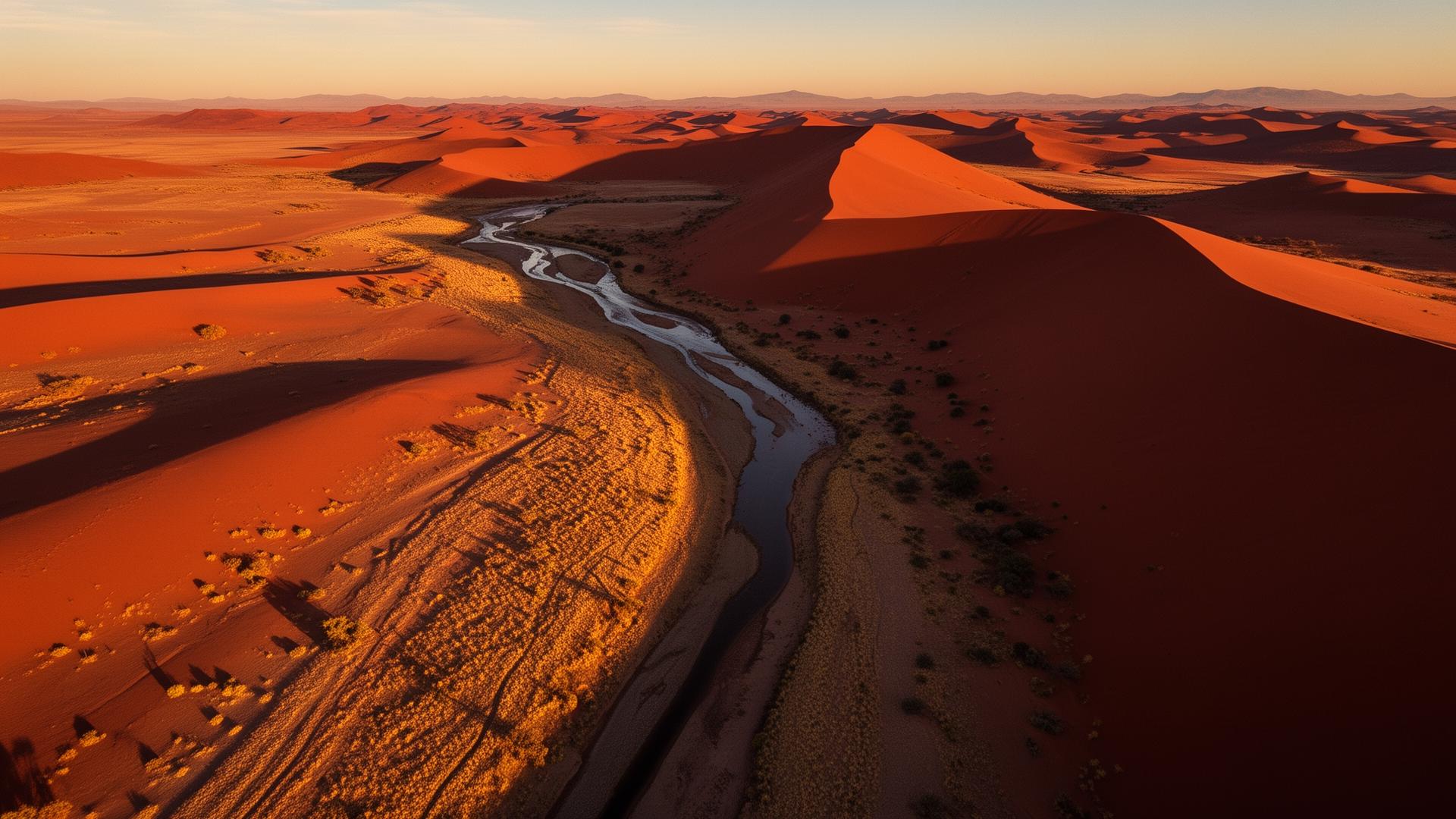

Swakopmund to Etosha is the leg the route maps make look simple. It is not. Google Maps prices it at about 6 hours by stitching together the C35 north through Henties Bay, Uis, and Khorixas — most of which is gravel — and then assuming you'll drive it all in one push. In practice, with a fuel stop and a couple of stretches at realistic gravel speeds, plan 8 hours door-to-door. With Spitzkoppe as a detour or photo stop, plan 9. This is the drive on the classic loop that most first-timers underestimate, and the one where 'we'll just push through' decisions cost the most.
On this page9What this guide is not · The two real routes …
- 1.What this guide is not
- 2.The two real routes
- 3.Segment-by-segment: the C35 inland route
- 4.Segment-by-segment: the Spitzkoppe scenic option
- 5.Fuel reality: the Uis-to-Khorixas gap
- 6.How we actually drive Namibian gravel (drive-specific notes)
- 7.When to split this drive (most travellers should)
- 8.Pushing through in one day: the timing math
- 9.Who this drive is wrong for
What this guide is not
Not a list of things to see in Henties Bay or another piece on the Spitzkoppe sunrise. It's the operational drive — segment by segment, where the time really goes, and the fuel and timing decisions that decide whether you arrive at Okaukuejo for sundowners or sleep at a campsite near the gate.
If you only read one section, read 'Fuel reality: the Uis-to-Khorixas gap' below. Running out of fuel between Uis and Khorixas is the single most-likely thing to ruin this day.
Quick check
Is this you?
The two real routes
Both are mostly gravel after the first 70 km. Both finish on tar from Otjiwarongo to the Andersson Gate. The difference is the middle.
- C35 inland route (~530 km). Swakopmund → Henties Bay (tar) → Uis (C35 gravel) → Khorixas (C39 gravel) → Otjiwarongo (C39 → C38, tar from Outjo) → Andersson Gate. Most direct, mostly gravel for the middle 350 km. ~7h moving time.
- D1918 / Spitzkoppe scenic route (~570 km). Swakopmund → Spitzkoppe (D1918 gravel) → Uis (D1930 gravel) → onward as above. Adds ~40 km and 30–45 min plus a 1–2 hour Spitzkoppe stop. ~7.5h moving plus the stop.
Segment-by-segment: the C35 inland route
Dry-condition realistic for a 2WD driven the way we drive gravel — fast on graded surfaces, slow where the road punishes you.
- Swakopmund → Henties Bay (C34, ~75 km, ~1h). Salt-and-gravel coastal road. Speed limit 100, comfortable at 90, watch for fog patches even in summer. Last reliable seafront fuel at the Engen in Henties.
- Henties Bay → Uis (C35, ~155 km, ~2h). Graded gravel inland. Surface is reasonable for the first 80 km, then corrugations and washboard appear. Sustained 80 km/h is the realistic ceiling. Uis is a tiny mining town with one fuel station — TOP UP HERE regardless of what the fuel gauge says.
- Uis → Khorixas (C35 → C39, ~135 km, ~2h). The hardest section of the drive. Surface varies, washboard is common, and the road climbs into Damaraland. Drop to 70 on the rough patches. The Brandberg passes you on the left for the first 30 minutes — worth a glance, not a stop.
- Khorixas → Outjo (C39, ~110 km, ~1h30). Continued gravel, gradually improving. Outjo is the welcome return to tar.
- Outjo → Andersson Gate (C38, ~110 km, ~1h15). Tar. Easy, fast, the relief leg. Last fuel at Outjo's bakery-fuel-stop combo.
- Andersson Gate → Okaukuejo Camp (~17 km, ~30 min). Tar inside the park. Drive slowly — you're arriving, but you're also game-driving.
Segment-by-segment: the Spitzkoppe scenic option
Slower, more beautiful, and the section where most travellers feel they got the most out of the drive. Adds 30–45 minutes of driving plus your Spitzkoppe stop.
- Swakopmund → Spitzkoppe turn-off (B2 → D1918, ~140 km, ~1h45). Tar east on the B2 to Usakos area, then north on the D1918 gravel — well graded, fast.
- Spitzkoppe stop. The Bushman's Paradise short walk takes 30 minutes; the Rock Arch short drive plus walk takes 60. Allow 90 minutes minimum, 2 hours if you want to actually be there rather than tick it.
- Spitzkoppe → Uis (D1930, ~90 km, ~1h30). Quieter gravel road, decent surface, dramatic landscape.
- Uis onwards as above (~480 km still to go after Uis if you're going to Etosha same day — this is why Spitzkoppe usually breaks the drive at Uis or Damaraland).
Fuel reality: the Uis-to-Khorixas gap
This is the planning detail that catches first-timers. From Uis to Khorixas is roughly 135 km of gravel road with no fuel and limited mobile signal. A 2WD rental with a 50-litre tank running at 9 L/100 km on gravel uses around 12 litres on that stretch. Comfortable margin, until you've also burnt fuel on the Henties → Uis leg and on a Spitzkoppe detour.
The rule: top up to full in Uis without exception. Do not assume the fuel station in Uis will be open — it usually is, but it occasionally is not, in which case you turn around and refuel in Henties before continuing. Better a 90-minute detour than walking on the C35.
Carry 5 litres of water per person per day on this leg regardless. Mobile signal is patchy on the C35 and effectively absent on the D1918/D1930. Download offline maps for Erongo, Kunene, and Oshikoto regions before leaving Swakopmund.
How we actually drive Namibian gravel (drive-specific notes)
Three things that matter most on this leg specifically:
Speed by surface, not by signpost. Posted 100 km/h on the C35 is fiction. 80 on the best graded sections, 60–70 on washboard, 40 on anything loose or rocky. Steering goes light above 90 km/h on washboard — that's the car telling you to slow down.
Brake before the corner. The C39 between Khorixas and Outjo has surprisingly tight bends that arrive without warning. Read the road 200 m ahead.
Watch for oncoming vehicles on the C35. Trucks throw stones. When you see one coming, ease off the throttle and steer slightly toward the verge — a windshield crack is a 4-hour Swakopmund return for a replacement.
When to split this drive (most travellers should)
We almost always recommend breaking this leg in two. The classic loop is more enjoyable when day one out of Swakopmund is a short Damaraland day, not a marathon Etosha day.
- Spitzkoppe split. Spitzkoppe Community Campsites are basic, atmospheric, and turn this into a 3-hour day plus a 4-hour next day. Best for anyone interested in granite landscape or stargazing.
- Damaraland split. Stay at Mowani, Camp Kipwe, or one of the Twyfelfontein lodges. Turns a brutal day into two enjoyable ones, and adds Damaraland to the trip — usually the most under-rated region in Namibia.
- Outjo split. Less scenic but practical. Outjo Garden Lodge or one of the guest farms north of town breaks the day and puts you 90 minutes from the gate the next morning. Best if you've already done Damaraland on a previous trip.
Pushing through in one day: the timing math
If you must do Swakopmund to Etosha in one day, here is the timing that works:
07:30 depart Swakopmund. 08:30 fuel at Henties Bay. 10:30 fuel and snack at Uis. 13:00 short stop near Khorixas. 14:30 fuel at Outjo. 15:30 at Andersson Gate. 16:00 at Okaukuejo Camp. Tight but workable.
Anything after a 09:00 departure and you are arriving at the gate too close to its closing window. The drive is not the constraint — the camp gate is.
Who this drive is wrong for
Travellers on a 7-day Namibia trip with Etosha already booked. Adding Swakopmund-to-Etosha in one day after a Sossusvlei-to-Swakopmund day means two long gravel days back-to-back. We usually rework the route.
Anyone with windshield-crack anxiety. The C35 is the road in Namibia where windshields actually crack. If that's on your mind, take the longer B2 → Karibib → Otjiwarongo tar alternative (adds 1.5 hours but is all tar). It's the right call for nervous drivers even though it's the 'wrong' map answer.
Travellers on the route in reverse (Etosha → Swakopmund) after a long Etosha morning. Add a Damaraland night. Pushing 8 hours after a 6am game drive is not a holiday.
Frequently asked questions
How long does it really take to drive from Swakopmund to Etosha?
About 8 hours door-to-door on the standard C35 inland route — roughly 7 hours of moving time plus an hour for fuel and stops. Google Maps quotes ~6, which assumes gravel speeds the road won't actually let you hold.
Is there a tar route from Swakopmund to Etosha?
Yes — via Karibib and Otjiwarongo (~600 km, ~7h all tar). Longer in distance and slightly slower in time, but no gravel and no windshield-crack risk. The right call for nervous drivers.
Should I overnight on the way?
We almost always recommend it. Damaraland (Mowani, Camp Kipwe) is the strongest split — turns a brutal day into two enjoyable ones and adds the best under-rated region in Namibia. Spitzkoppe campsites work for stargazers. Outjo is the practical fallback.
Where do I fuel up on the Swakopmund-to-Etosha drive?
Swakopmund (full tank before leaving), Henties Bay, Uis (mandatory — last fuel for 135 km), and Outjo. The Uis fuel station is small and not 24/7, so don't arrive after dark.
Is the C35 dangerous?
Not inherently. It is graded gravel that punishes specific mistakes: driving over 80 km/h on washboard, late braking, and oncoming-traffic stone-throw. Driven slowly and steadily, it's a normal Namibian gravel road.
Final verdict
Swakopmund to Etosha is not the hardest drive in Namibia, but it is the one most first-timers underestimate. The fix is almost always to split the day: Damaraland between you and Etosha turns a marathon into a holiday. If you must push through, leave by 07:30, top up in Uis without exception, and treat the 16:00 gate cut-off as the real deadline. If you want us to look at how this leg fits into the rest of your loop — and whether the day-shape works at all — send us the draft.

Kian, Inside Namibia· Based in Swakopmund · desert specialist
I live in Swakopmund and spend most of my time in the desert — I know its dunes, its silences, and most of the snakes you'd rather not meet. My favourite stretches are the loneliness of Damaraland and the birding in Caprivi, and that's the lens I bring to every route I review.
Want a second pair of eyes before you book the route?
We read every itinerary against exactly the kind of day-shape problem this drive creates. Most reviews come back the same week, with the legs to fix and the nights to add or move.