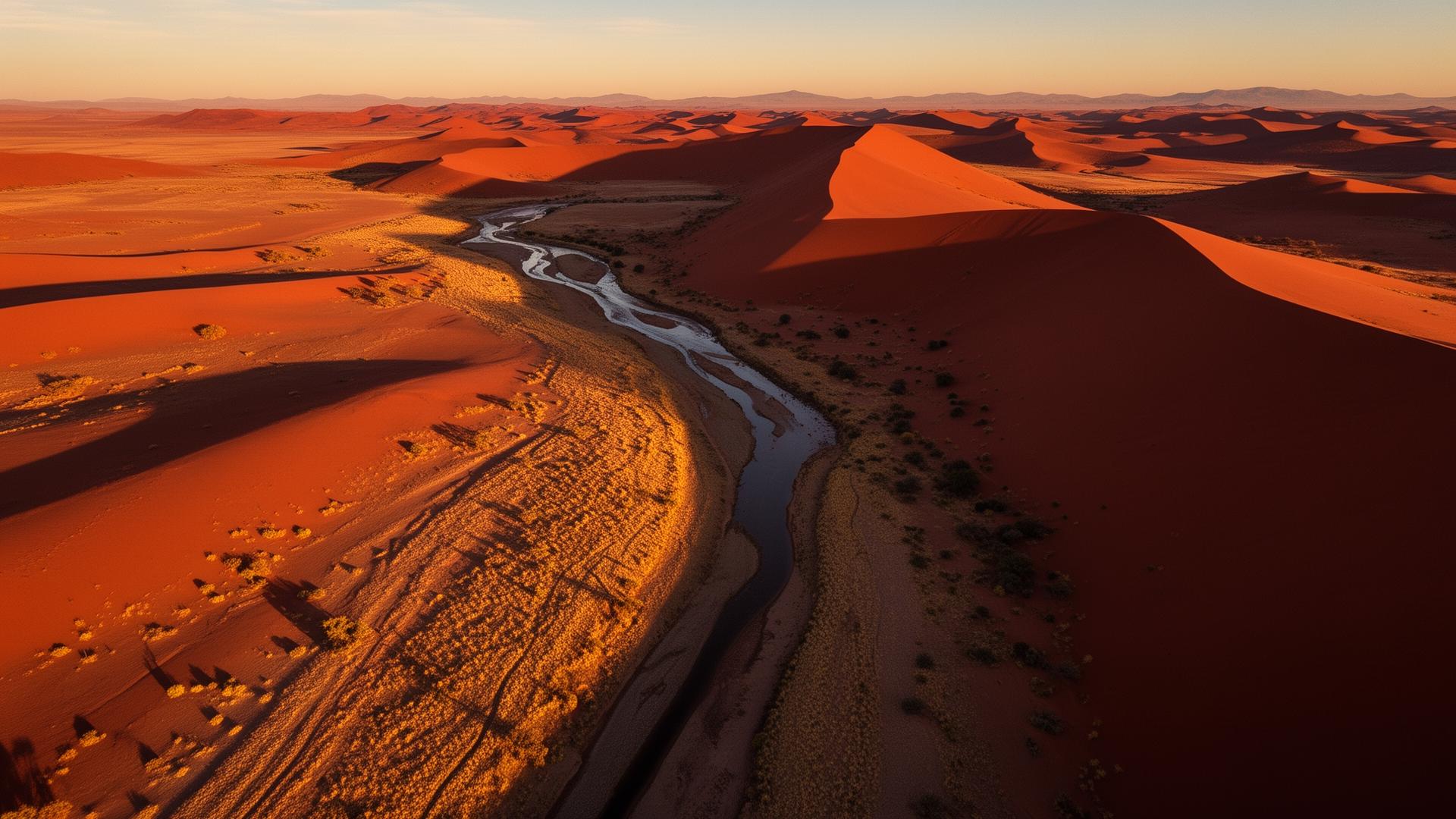

The Caprivi — formally the Zambezi region — is the one part of Namibia where the season changes the experience completely, not just at the margins. In the dry season the strip is a wildlife concentration story: animals pulled to the four rivers (Okavango, Kwando, Zambezi, Chobe), roads firm, lodges humming. In the wet season it becomes a different country: green, loud, full of birds, full of water, and with half its gravel infrastructure unusable. Neither is wrong. They are different trips, and the article most travellers need is the one that helps them pick.
On this page7What 'dry' and 'wet' actually mean in the Zambezi region · Dry season (May–October): the wildlife concentration story …
- 1.What 'dry' and 'wet' actually mean in the Zambezi region
- 2.Dry season (May–October): the wildlife concentration story
- 3.Wet season (November–April): the green, loud, dramatic version
- 4.Month-by-month verdict
- 5.What changes for the self-drive specifically
- 6.Which season matches which traveller
- 7.What we steer travellers away from
What 'dry' and 'wet' actually mean in the Zambezi region
The rest of Namibia is desert or semi-desert. The Caprivi is not. It receives 500–700 mm of rain a year — three to five times more than the central plateau — concentrated almost entirely between December and March. That rain doesn't just sit. It runs into the four rivers, which flood. The Zambezi peaks in March–April, the Chobe in April–May. The Okavango delta downstream peaks even later. So 'wet season' in the Caprivi isn't only about rain falling — it's about water arriving from upstream catchments that may have stopped raining months earlier.
That distinction matters because the practical effects of water lag the rain by months. February is the wettest month overhead. April is the highest river flow. The roads are at their worst in late February, the floodplains at their most dramatic in April.
Quick check
Is this you?
Dry season (May–October): the wildlife concentration story
From May onward, the rains stop and the bush dries out. The smaller pans inland evaporate. Animals begin to compress toward the permanent water of the four rivers. By August, the wildlife densities along the Kwando in Mudumu, the Zambezi near Katima, and the Okavango near Bwabwata are at their seasonal peak. This is when game drives along the river systems feel inevitable rather than lucky.
- Roads: all main routes firm and open. The B8 is tar regardless. Gravel side-roads into Mudumu and Nkasa Rupara are at their best from June onwards.
- Wildlife: elephant herds along the rivers in numbers, buffalo, hippo, crocodile, sable, roan antelope. Predator sightings (lion, wild dog) genuinely good in Mudumu in August–September.
- Birds: still plentiful but less spectacular than wet season. Resident species easier to see in the thinner bush.
- Mosquitos: low to moderate. Malaria risk reduced but never zero — continue prophylaxis.
- Lodges: all open, full staff, peak prices in July–August. Book Mudumu and Bwabwata lodges 6+ months out for school-holiday weeks.
Wet season (November–April): the green, loud, dramatic version
Late November the first thunderstorms arrive. By January the strip is unrecognisable from October: tall grass, full leaf, surface water everywhere, dramatic afternoon storms, double rainbows that don't get photographed because the light is too overwhelming. The wildlife disperses inland — they no longer need to be at the rivers, because there is water everywhere. Densities at the rivers drop. Birding explodes.
- Roads: the B8 stays tar and open year-round but can flood at low culverts after big storms (1–2 day disruptions in February typically). Gravel side-roads into Mudumu deteriorate. Nkasa Rupara often unreachable from January to March.
- Wildlife: dispersed and harder to find. Plains game numbers visible along the road drop sharply. Predators harder to track. Elephants more spread out.
- Birds: spectacular. Migratory species (carmine bee-eater, paradise flycatcher, Wahlberg's eagle, dozens of waders) at peak. Many residents in breeding plumage. The Caprivi is the strongest birding region in Namibia, and wet season is its strongest moment.
- Mosquitos: high. Take malaria prophylaxis seriously. Long sleeves at dusk are not optional.
- Lodges: most stay open year-round but some smaller camps close in February–March. Prices drop 20–35% off peak rates.
Month-by-month verdict
Honest summary of each month, written for travellers choosing when to actually go:
- May: late dry transition. Bush still green, animals starting to compress at water. Excellent shoulder. Mosquitos low. Roads firm.
- June: solid dry season starting. Cool nights, easy driving, photography light getting good. Recommended.
- July: peak dry, peak cool, peak wildlife concentration on the rivers. Recommended if you can handle cold mornings (4–8°C at dawn).
- August: like July with slightly warmer days. Strongest single month for first-time Caprivi visitors.
- September: warm and dry. Wildlife densities still strong. Light becoming hazier from regional fires.
- October: hot, dry, dusty. Wildlife concentration at peak but daytime heat (35°C+) reduces game-drive enjoyment. Photographers love it for the light.
- November: first storms arrive. Migrants returning. Transitional month — can go either way depending on when rains break. Birders' month.
- December: rains established, bush greening rapidly. Holiday-period prices in mid-to-late December. Game drives less productive.
- January: wet, hot, dramatic skies. Wildlife dispersed. Birding excellent. Some side-roads softening.
- February: peak rain. Wettest, hottest, mosquito peak, road infrastructure most stressed. Avoid for self-drive unless birding-first.
- March: rain tapering. Skies clearing. River levels rising as upstream water arrives. Beautiful but inaccessible in places.
- April: water levels peak in the floodplains. Most photogenic month for landscape. Roads beginning to firm. Bird life still very strong.
What changes for the self-drive specifically
Dry season self-drive: a normal Namibian self-drive with one extra rule (don't drive after dark because of livestock and elephants). A 2WD sedan handles all the main routes and most lodge access.
Wet season self-drive: a 4x4 with high clearance becomes meaningful. Side-roads soften, low-clearance vehicles get stuck. River-crossing culverts can flood after storms — never drive through standing water of unknown depth. Mobile signal weakens further. Recovery is slow and expensive.
If you are wet-season committed and want to self-drive, we usually advise sticking to the B8 corridor and using transfers or boat trips for the parks, rather than attempting deep gravel.
Which season matches which traveller
First-time Caprivi visitor, wildlife-first: dry season, July–September. Maximum chance of strong sightings, lowest planning friction, highest lodge availability.
Birder or photographer interested in landscape and skies: wet season, late November or April. Dramatic conditions, fewer other guests, lower prices.
Traveller adding Caprivi as a bridge to Botswana or Victoria Falls: dry season strongly preferred. The cross-border infrastructure is more reliable, lodge availability easier on both sides.
Traveller returning for a second Namibia trip and looking for a different version: wet season is the right answer. The country looks completely different and the Caprivi is where that difference is most extreme.
What we steer travellers away from
February self-drives. The combination of rain, mosquitos, soft roads, and some lodge closures makes February the one month we actively recommend against for a first Caprivi trip.
Single-night stops in the wet season. Wildlife is dispersed, so the productive game-drive window per lodge stretches longer. One night gives you one window. Two nights doubles your chances.
Pushing for Nkasa Rupara between December and April. Even when technically accessible, the road into the park can become impassable between morning and afternoon after a single storm. The park itself is brilliant — but the timing has to be right.
Frequently asked questions
When is the best time to visit the Caprivi (Zambezi region)?
Late dry season — July through September — is the best all-round time for first-time visitors. Wildlife is concentrated at the rivers, all roads are open, mosquitos are at their lowest, and lodges are fully operational. For birders, late November or April beats the dry season.
Is the Caprivi worth visiting in the rainy season?
For birders and landscape photographers, absolutely — it's the strongest birding season in Namibia and the landscape is at its most dramatic. For wildlife-first first-timers, no — game densities at the rivers drop because animals disperse into the now-watered interior. February specifically we recommend skipping.
Are the roads in the Caprivi passable year-round?
The B8 (tar through the whole strip) is open year-round with rare short-term closures after storms. Gravel side-roads into Mudumu deteriorate in the wet season. Nkasa Rupara is often inaccessible between January and March.
Do I need malaria prophylaxis in the Caprivi?
Yes, year-round, for everyone. The Caprivi is the highest-risk malaria zone in Namibia. Risk peaks in the wet season (November–April) but is real even in the dry months. Speak to a travel doctor about prophylaxis specific to your route and length of stay.
Is the Caprivi cheaper in the wet season?
Yes, generally 20–35% off peak-season rates from December through March. Some smaller camps close in February. The savings are real but should be weighed against the wildlife and road trade-offs above.
Final verdict
The Caprivi is the one Namibian region where 'when' matters as much as 'where'. The dry season delivers the wildlife concentration most travellers came for. The wet season delivers a Caprivi most first-timers never see — greener, louder, harder to access, and unforgettable to the right traveller. Pick the season that matches the trip, not the trip that matches the season. If you want help working out which version fits your dates, your priorities, and the rest of your Namibia route, that's exactly the kind of question we plan trips around.
Kian, Inside Namibia· Based in Swakopmund · desert specialist
I live in Swakopmund and spend most of my time in the desert — I know its dunes, its silences, and most of the snakes you'd rather not meet. My favourite stretches are the loneliness of Damaraland and the birding in Caprivi, and that's the lens I bring to every route I review.
Adding Caprivi changes the whole route shape
Dry-season Caprivi connects beautifully to Etosha and Victoria Falls. Wet-season Caprivi is a different trip. We plan the whole route from your dates and priorities — not from a template.