
Most first-time Namibia trips are not ruined by picking the wrong place. They are quietly degraded by ten predictable planning mistakes — too many regions, too few nights at the anchors, the wrong car for the route, the right lodges booked in the wrong order, and a packing list built for a safari country that Namibia is not. The destinations are usually fine. The wiring around them is what tires people out.
On this page111. Treating Namibia like Kenya, South Africa, or Botswana · 2. Picking the wrong season for the trip you actually want …
- 1.1. Treating Namibia like Kenya, South Africa, or Botswana
- 2.2. Picking the wrong season for the trip you actually want
- 3.3. Underestimating drive times and overestimating sightseeing days
- 4.4. The one-night Sossusvlei (and the one-night Etosha)
- 5.5. Booking lodges before the route is worked out
- 6.6. Choosing the wrong vehicle for the actual route
- 7.7. Packing for the wrong climate
- 8.8. Underbudgeting fuel, park fees, and the small recurring costs
- 9.9. Forgetting the arrival day exists (and trying to drive on it)
- 10.10. Building the trip alone from blog posts and brochures
- 11.What a clean first-time itinerary usually looks like
1. Treating Namibia like Kenya, South Africa, or Botswana
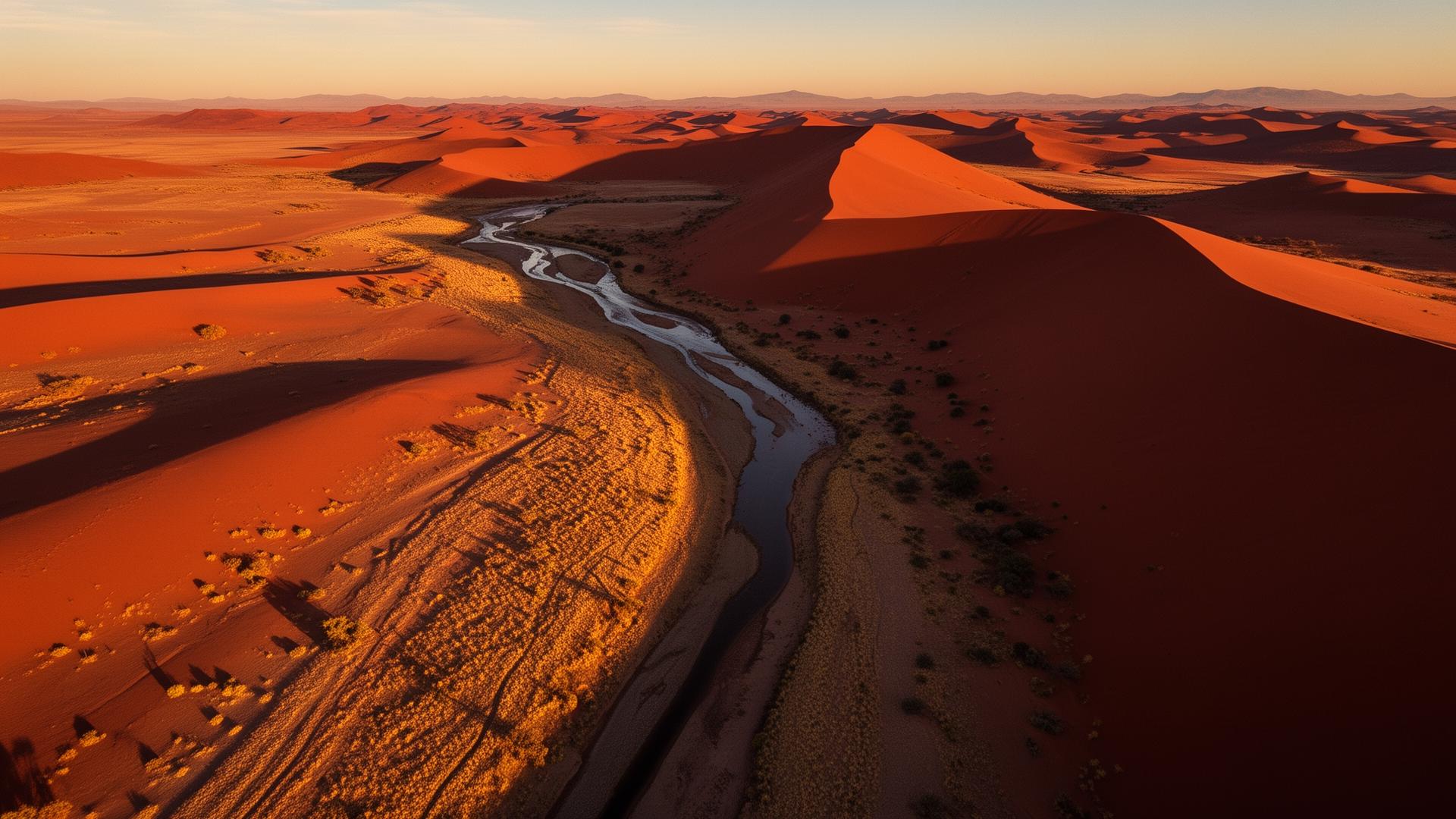
Most first-time Namibia travellers have either been on a previous Africa trip or have read about one. The mental model arrives pre-loaded: open jeep, ranger, two game drives a day, three Big Five sightings before lunch. Then they land and discover Namibia is mostly a self-drive country in a desert, where the wildlife density is genuinely lower, the distances are bigger, and the dominant experience is landscape rather than animal.
Etosha is the closest thing to a classic safari park, and even there the rhythm is different — you drive your own car between waterholes and you sit and wait. There is no ranger pointing at a leopard from a Land Cruiser. The trip that delivers what you came for is built around the desert (Sossusvlei, Damaraland, the coast) with Etosha as one part of it, not the whole point.
The fix: before you fall in love with a route, decide whether you want a wildlife trip (different country, probably Botswana or northern Tanzania) or a desert-and-distance trip with strong wildlife in one section. Namibia is excellent at the second. It is unfair to ask it to be the first.
Quick check
Is this you?
2. Picking the wrong season for the trip you actually want
May to October is the dry, easy, peak season. Lodges fill 6–9 months out, the gravel is at its most predictable, animals concentrate at waterholes, and night temperatures in the desert can drop close to freezing. November to April is the green season — fewer crowds, dramatic skies, full rivers, sometimes flooded access roads, and wildlife dispersed across the country instead of crowded around waterholes.
First-timers tend to default to July–August because it is on every blog. That is fine if the trip is wildlife-leaning. It is the wrong call if you wanted dramatic desert light and quieter lodges, in which case April–May or October–November are usually better. It is also a problem if the trip is camping-heavy: nights in Sesriem in July are seriously cold, and many travellers underestimate that.
- Best for big-game viewing in Etosha: June–October.
- Best for desert photography and lighter crowds: April–May, October–early November.
- Best avoided unless you accept road risk: late January–March (the heart of the rainy season can flood gravel roads and close park sections).
3. Underestimating drive times and overestimating sightseeing days
The map says 350 km. Google Maps says four hours. The traveller plans a leisurely breakfast, three sightseeing stops, lunch in Solitaire, and a sundowner at the lodge. The day quietly falls apart by the afternoon, because gravel speed in Namibia is 80 km/h and dropping below 70 on washboard, the stops take 25 minutes each, the lodge access road is 12 km of slow track, and the unwritten rule of Namibian self-driving is that you do not drive after dark.
After-dark driving is the single most dangerous part of a Namibian trip. Roads are unfenced, kudu and oryx walk onto the tar at dusk, and many rental insurance policies exclude after-dark animal strikes. Plan every day to be parked at the lodge by sunset. In winter (June–August), that is roughly 17:30. The day is shorter than first-timers imagine.
The fix is to stop treating drive days as sightseeing days. Some days exist only to get from A to B. The best routes accept this and make those transfer days short.
4. The one-night Sossusvlei (and the one-night Etosha)
If we had to fix only one thing about most first-time Namibia itineraries, it would be these two stops. A single night at Sossusvlei means you arrive in the late afternoon, sleep, and leave the next day — and the Sossusvlei sunrise is the entire point of being there. You came for Deadvlei and the dunes at first light, and a one-night stop almost always means you skip exactly that.
Etosha works the same way. A one-night stop is half a day at one waterhole and a transfer the next morning. Two nights, in the right gate area, becomes a full waterhole day with the patience that wildlife actually rewards. We tell every client the same thing: the second night unlocks the experience the first night was meant to deliver.
If your draft has either of these as a single night, the trip is asking you to cut something else — usually a region you added because it sounded good, not because the route needed it.
5. Booking lodges before the route is worked out
This is the expensive mistake. People see a striking lodge on Instagram or in a brochure, lock it in early, then try to build the route around it. By the time the rest of the plan is sketched, the locked lodge is awkwardly placed — wrong direction, wrong night number, wrong distance from the next stop — and the cancellation window has closed. Most Namibian lodges run strict cancellation terms (30–60% of the booking value once you are inside 30 days), so the route has to bend around the mistake.
Booking order matters. The handful of nights that shape the route — typically Sesriem-area Sossusvlei lodges and inside-park Etosha camps (Okaukuejo, Halali, Namutoni) — should be the first things you lock, because they sell out 6–9 months ahead. Everything else gets built around them: Windhoek, Swakopmund, outside-park Etosha alternatives, and Damaraland properties have far more flexibility.
6. Choosing the wrong vehicle for the actual route
Two errors here, both common. The first is renting a 2WD sedan for a route that has gravel beyond the main C-roads, a long lodge access road, or any rainy-season exposure. The second is the opposite — renting a fully kitted 4x4 with a rooftop tent for a couple who are sleeping in lodges every night, where the rooftop adds noise, drag, and an awkward height for parking, with no benefit.
Match the car to the worst day of the route, not the average. If the plan includes Damaraland, the Kaokoveld, Spitzkoppe access, or any deep gravel detour, a 4x4 with two spare wheels earns its price. If the plan is a classic lodge-based loop in dry season on B and major C-roads, a 2WD with high clearance can be perfectly fine. The mistake is choosing the dream car instead of the right one — and discovering the difference on day five.
The other thing nobody mentions on the rental site: tyres, windscreens, rims and underbody damage are excluded from almost every insurance package, even the most expensive 'super cover' tier. These are the exact failure modes gravel causes. Buy separate tyre and windscreen cover if it is offered, and never argue about the 80 km/h gravel ceiling — above that, claims start getting reclassified as reckless driving.
7. Packing for the wrong climate
The Namibian desert is hot in the day and cold at night, year-round. First-timers consistently pack for the day temperature they read about and freeze on their first morning at Sossusvlei. June–August nights at Sesriem can drop to 0–5°C. Even October mornings start cold enough to need a fleece and a beanie before sunrise game viewing.
The other packing miss is sun protection. The Namibian sun at altitude in the desert is harsher than most travellers expect, and the reflected light off the dunes and salt pans punishes anyone underprepared. SPF 50, a wide-brimmed hat, sunglasses, and a long-sleeve UPF shirt for the open-vehicle desert days are not optional. Lip balm with SPF is the small item people regret leaving behind by day three.
- Layers: a warm fleece or down jacket for evenings and early mornings, even in summer.
- A buff or scarf — gravel dust is constant and the wind in the Skeleton Coast and Damaraland is real.
- Closed walking shoes plus sandals — open shoes alone are not enough for Deadvlei or thorny Damaraland tracks.
- A small medical kit, rehydration sachets, and any prescription you depend on (pharmacies outside Windhoek and Swakopmund are limited).
8. Underbudgeting fuel, park fees, and the small recurring costs
The flights and the lodges get budgeted carefully. The middle layer often does not. Self-drive Namibia has a recurring cost stack that quietly adds up: fuel (a typical first-timer loop burns 350–500L over two weeks), park entry fees (currently around N$150 per adult per day for non-residents at most parks, with separate vehicle fees), conservancy fees in Damaraland and the Kaokoveld, lodge dinners (most non-self-catering lodges charge N$650–950 per person for set dinner), tips for guides and trackers, and a contingency for the punctures and windscreen chips that genuinely happen on most trips.
A realistic add-on for a 14-day classic two-person loop, on top of accommodation and the car: roughly N$25,000–N$40,000, depending on lodge tier and how many activities you book. First-timers who skipped this layer end up either cutting activities they came for or finishing the trip with a credit-card surprise.
9. Forgetting the arrival day exists (and trying to drive on it)
Long-haul flight, customs, car collection, picking up groceries in Windhoek, and then a 4–5 hour drive on the wrong side of the road on Namibian gravel. By sunset, the day has gone exactly as you would expect. We have seen this end in animal strikes, missed dinner reservations, and at least one rolled rental.
The fix is small and almost free: one quiet night in Windhoek (or near the airport at Hilltop Guesthouse or similar) before the trip starts. Pick the car up the morning after, do a real Spar or Checkers grocery run, get a SIM, and start the drive fresh. The trip becomes calmer from minute one. Trying to save that night by driving on arrival day is the worst-value optimisation in Namibian travel.
10. Building the trip alone from blog posts and brochures
Not a sales pitch — a pattern observation. Almost every weak first-time itinerary we are asked to review was assembled from four or five blog posts and a couple of lodge websites. Each source was reasonable. The combination was not. Blogs describe what their author did. Lodge sites describe their own property. Neither describes the whole route, the booking order, the seasonal variation, or the trade-offs between two stops you have not yet visited.
The point is not that you need an advisor. The point is that the gap between 'a possible Namibia route' and 'the right one for you' is usually invisible until someone with the country in their head reads your draft. Whether that is us or a friend who has done a similar trip, the review step is what catches the mistakes above before they are locked in. Skipping the review is the meta-mistake that contains all the others.
What a clean first-time itinerary usually looks like
After several hundred reviews, the strongest first-time shapes are boringly similar. For 10 days: Windhoek arrival, Sossusvlei (2 nights), Swakopmund (2 nights, no driving day in the middle), Damaraland or Etosha (3 nights split between two camps), Windhoek. For 14 days: add a second region — usually a private concession or a deeper Etosha — and turn one of the transfer days into a real rest day. Two-week trips that try to add a fifth region almost always lose the trip's calmness in exchange for a stop nobody remembers in the post-trip emails.
None of this is exotic. The mistake is rarely the lack of a clever idea. The mistake is usually the absence of one of these basics — a one-night Sossusvlei, a wrong-season camping plan, a 2WD on a Damaraland route, a lodge booked in the wrong order — and that is what review is for.
Frequently asked questions
What is the single biggest mistake first-time Namibia travellers make?
Trying to fit too many regions into too few days. Three regions is the practical ceiling for ten days, and four is where the trip starts feeling tired. Cutting one region almost always improves the whole route — fewer driving days, longer stays at the anchors, and more time at the places you actually came for.
Is it safe to drive in Namibia at night?
No. Roads are mostly unfenced, kudu and oryx move onto the tar at dusk, gravel hides potholes once your headlights flatten depth perception, and many rental insurance policies exclude after-dark animal strikes. Plan every day to be parked at the lodge by sunset — that is the real end of your driving window.
Do I need a 4x4 for a first Namibia trip?
Not always. For a classic dry-season loop on B and major C-roads, sleeping in lodges, a 2WD with decent clearance can work. A 4x4 earns its price the moment your route includes Damaraland, the Kaokoveld, Spitzkoppe access, rainy-season travel, or any camping. Match the car to the worst day of your route, not the average.
When should I start booking a Namibia trip?
For peak season (May–October), the inside-park Etosha camps and Sesriem-area Sossusvlei lodges should be locked 6–9 months ahead. Build the route around those two anchor bookings, then add the car, then book the easier nights (Windhoek, Swakopmund, outside-park alternatives) last. Booking order matters more than booking speed.
How cold does it actually get in the Namibian desert?
Colder than first-timers expect. June–August nights at Sesriem can drop to 0–5°C, and even October mornings start cold enough to need a fleece. Pack layers regardless of when you travel — the day temperature you see in guides hides the morning and evening reality.
Final verdict
If you already have a Namibia draft, we can read it for the mistakes above before they are locked in. The fix is usually two or three changes to pace and booking order — not a redesign — and that is exactly what a route review is for.
Kian, Inside Namibia· Based in Swakopmund · desert specialist
I live in Swakopmund and spend most of my time in the desert — I know its dunes, its silences, and most of the snakes you'd rather not meet. My favourite stretches are the loneliness of Damaraland and the birding in Caprivi, and that's the lens I bring to every route I review.
Have us read your Namibia draft before you book
Send us your draft itinerary and we will tell you what is working, where the pace is wrong, and which two or three changes will make the biggest difference. Most reviews come back the same week.