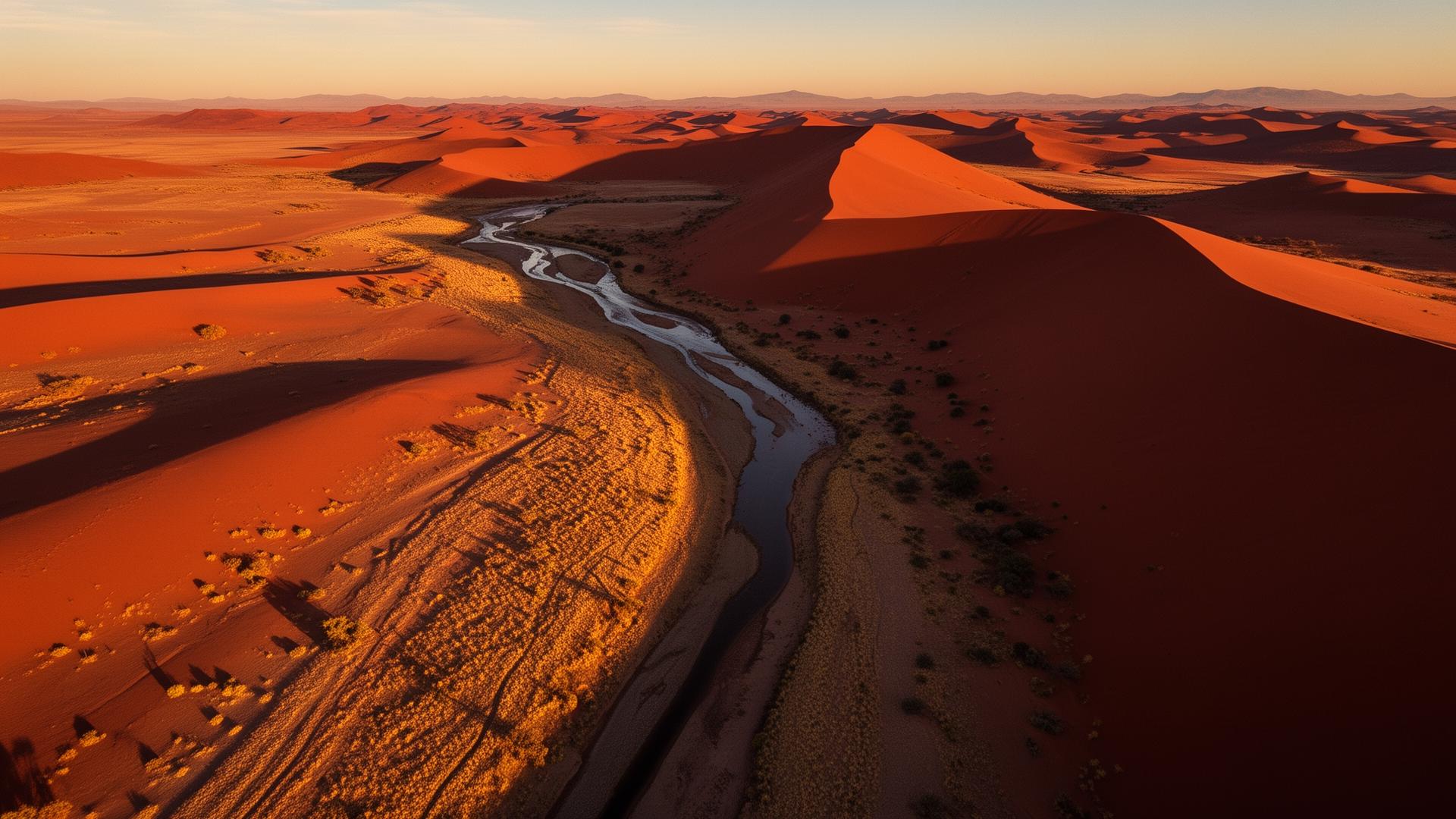

Namibia is one of the easier African countries to stay healthy in. Malaria is regional, water is generally safe in towns, and the bigger risks are sun, dust and dehydration. The kit is small, the rules are short, and the right preparation removes most of the worry.
On this page7Where malaria actually matters · Sun, dust and dehydration …
Where malaria actually matters
The Caprivi (Zambezi) Region and parts of the far north (Kunene, Zambezi, parts of Kavango and northern Etosha) are seasonal malaria zones, with risk highest in the wet months (roughly November to April).
Sossusvlei, Swakopmund, central Namibia and most of Etosha (especially in the dry season) are low-risk areas. Many travellers on a standard 10–14 day route do not take prophylaxis.
Talk to a travel doctor with your specific route. The honest answer depends on which weeks you are travelling and exactly where you sleep.
Quick check
Is this you?
Sun, dust and dehydration
These are the actual risks for most Namibia trips. Sun exposure at altitude is harsher than expected, especially around Sossusvlei and the central highlands.
Drink twice the water you think you need. Pack high-SPF sunscreen and reapply. Hat and lip balm with SPF are not optional.
Dust in the dry season is constant. If you have allergies or sinus issues, bring an extra supply of your usual medication.
Water and food
Tap water in Windhoek, Swakopmund and most major lodges is safe to drink. Some travellers prefer bottled water as a precaution.
On the road, carry bottled water as a buffer. Lodge restaurants are uniformly good for food safety. Roadside food, like anywhere, varies.
The medical kit
Painkillers, anti-diarrhoeal, oral rehydration sachets, antihistamines, plasters, antiseptic, blister treatment.
Sunscreen (SPF 50), aftersun, lip balm with SPF.
Tweezers for thorns. They are everywhere.
Personal prescriptions in original packaging. Bring more than you think you need — Namibia pharmacies are good, but not always conveniently located.
Vaccinations
Routine vaccines should be up to date (tetanus, MMR, etc.).
Hepatitis A is commonly recommended.
Yellow fever certificate is required if arriving from a yellow fever country (most direct flights from Europe and North America are not).
Rabies pre-exposure is sometimes recommended for longer trips into remote areas. Talk to a travel doctor.
Wildlife and bites
Snake and scorpion bites are rare but exist, especially around camps. Shake out boots in the morning.
Stay on the deck or in the room at night at lodges. Walking around camps after dark is the most common way people meet wildlife badly.
Insect repellent with DEET in the malaria-risk regions, plus long sleeves at dusk.
Common health mistakes
Skipping sunscreen on cloudy days. The UV is high regardless.
Not drinking enough water on long driving days.
Assuming malaria precautions are needed everywhere — they are not.
Forgetting that the closest hospital is sometimes 4–6 hours away. Driving safely is the most important health decision you make on a Namibia trip.
Final verdict
Namibia is not a high-risk health destination if you respect the basics: sun, water, dust, distance to medical care. We can help shape your route around your group's medical realities — kids, older travellers, or anyone who needs to stay closer to towns.
Want help shaping a health-aware route?
We plan and review Namibia self-drive routes including pacing for older travellers, kids, and anyone who needs to stay closer to medical support.