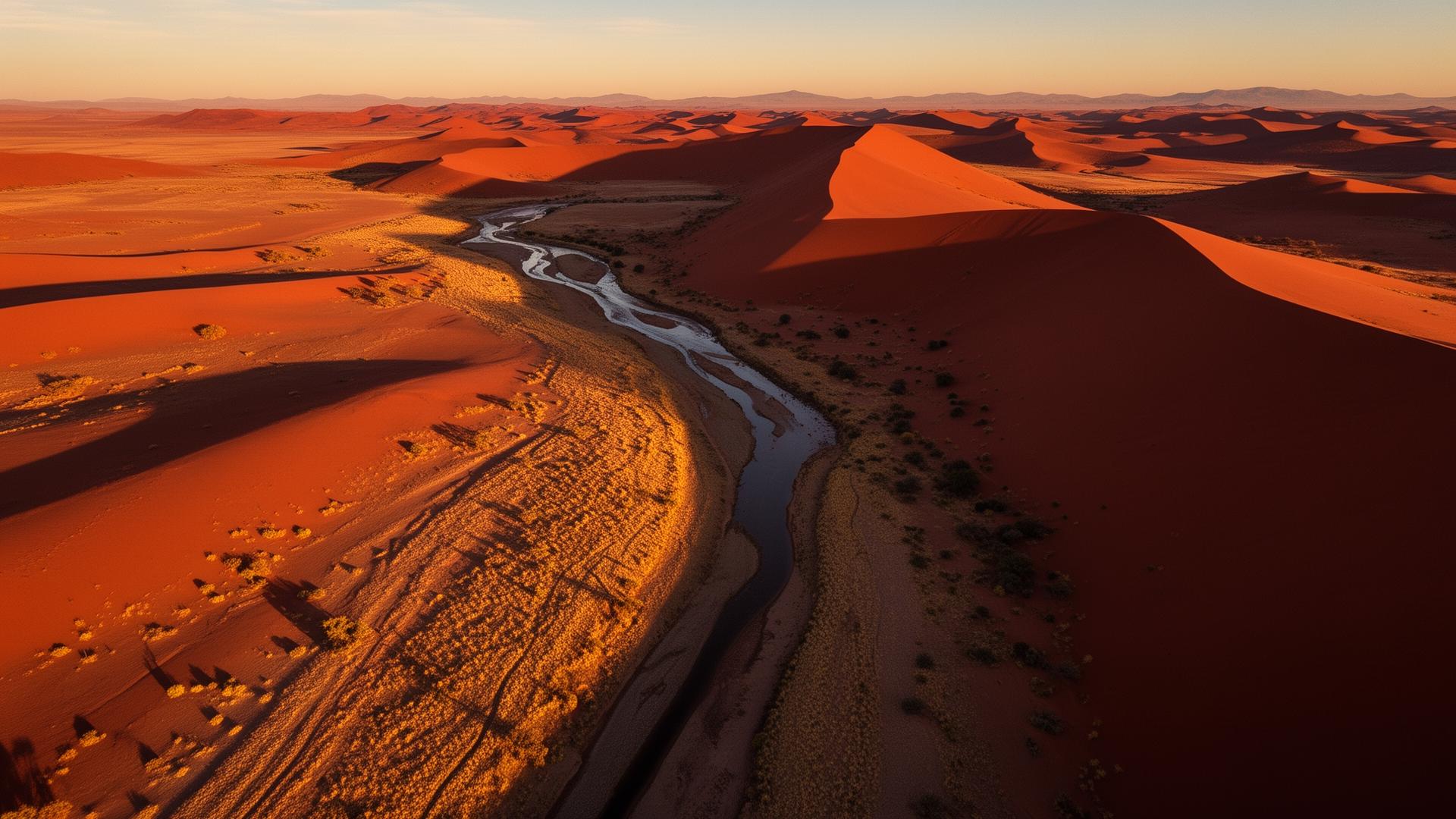

The C14 between Sesriem and Solitaire is roughly 70 km of empty Namibian gravel. It is a beautiful drive, it carries the daily Sossusvlei flow, and it is statistically the most common stretch of road for a self-drive vehicle to fail on. We have driven it hundreds of times. The protocol below is the one we tell every client and the one that has worked every time we have needed it.
On this page7Why this stretch breaks more vehicles than any other · The first ten minutes: do these things in this order …
- 1.Why this stretch breaks more vehicles than any other
- 2.The first ten minutes: do these things in this order
- 3.Why staying with the vehicle is non-negotiable
- 4.How SATIB Rescue actually works in practice
- 5.If you don't have SATIB cover and you don't have signal
- 6.What you should have done before you left
- 7.What we tell every client in the briefing
Why this stretch breaks more vehicles than any other
Three factors compound on the C14. First, it is the access road for the Sossusvlei day, which means it is driven by jet-lagged first-day visitors who have not yet adjusted to gravel speeds. Second, the surface is corrugated for stretches because of the daily traffic — the corrugations are what break the suspension, the shocks, and the exhaust mounts. Third, the heat profile in the afternoon (35–40°C in October–March) is hard on cooling systems, especially with vehicles that have been driven at 100 km/h for the previous hour.
The most common failures we see are: blown tyres (the gravel + speed combination), broken rear shock absorbers (the corrugations + speed), overheating (the engine load + ambient heat + reduced airflow at lower gravel speeds), and clutch failure (loaded vehicles climbing the Spreetshoogte). None of these is a 'wait at the side of the road for an hour and try again' problem.
Quick check
Is this you?
The first ten minutes: do these things in this order
1) Pull off the road completely. The C14 is one lane in each direction, and a stationary vehicle in the road on a blind crest is a fatality waiting for the next dust-cloud. Get fully off, even if it means scraping the suspension.
2) Hazard lights on. High-vis vest on. Reflective triangle 30 metres back along the road on the side oncoming traffic will see it.
3) Check signal. The C14 has scattered signal patches — the high points roughly every 15 km. Walk 50 metres to a slightly higher spot if necessary, but do not leave sight of the vehicle.
4) If signal: call SATIB Rescue first if you have cover (you should), or AA Namibia (+264 61 224 201) if you don't. Tell them: location (kilometre marker if you can see one, or 'C14 between Sesriem and Solitaire, closer to X'), vehicle make and registration, nature of the failure, number of people, water remaining.
5) If no signal: stay with the vehicle. Position water and shade (open both rear doors with reflective windscreen blanket creates a cool zone). The next vehicle is your communication channel.
Why staying with the vehicle is non-negotiable
The instinct in a Western city is to walk for help. On the C14 in February afternoon heat, walking is the decision that turns a breakdown into a medical emergency. The distances are deceptive — Solitaire looks like 'just over there' on the map and is in fact 25 km away, which is 5 hours of walking in 38°C heat without shade. Two litres of water is not enough. Heatstroke onset can be inside 90 minutes of exertion in those conditions, and once it starts you cannot reverse it without medical intervention.
The vehicle gives you shade, water, and visibility — passing drivers will stop for a stationary vehicle far more reliably than for a person on foot, because the vehicle is read as 'someone who needs help' while the person on foot is read as 'someone who is going somewhere'. Stay with the car.
How SATIB Rescue actually works in practice
SATIB Rescue is a southern African medical and logistics evacuation service. The cover for a Namibia self-drive trip costs around N$200 per person and includes road recovery, medical transport, and helicopter evacuation if required. We sell this as the single most cost-effective add-on of any trip — the failure mode it prevents is the failure mode that ends the trip badly.
The phone number for emergencies in Namibia is +264 81 124 0911. They take the location, the medical or mechanical situation, and they coordinate. For a mechanical breakdown on the C14, they will typically dispatch a recovery vehicle from Solitaire (45 minutes), and if there is a medical component a helicopter from Windhoek (90 minutes from call to wheels-down). For a tyre change you can do yourself, you don't need to call them — but for a 'we cannot move the vehicle' situation, this is the call.
If you don't have SATIB cover and you don't have signal
AA Namibia (+264 61 224 201) is the alternative on signal. They are slower and they tow rather than evacuate, but they exist and they answer. The Solitaire petrol station (+264 63 293 367) and Sossusvlei Lodge (+264 63 293 223) both monitor the C14 traffic and will dispatch help — call either of these if SATIB and AA aren't reaching.
If no signal at all: flag the next passing vehicle. The protocol is to stand visibly on your side of the road, hazard lights on, with one arm raised. Almost all Namibian and South African self-drivers will stop. When they stop: ask them to either (a) drive to Solitaire and call the petrol station, or (b) carry your message via WhatsApp from the next signal point to your destination lodge, who will then coordinate. Do not leave your vehicle to ride with a stranger unless the medical situation demands it. Wait at your vehicle for the help your message will summon.
What you should have done before you left
Before leaving the lodge that morning: full fuel, full water, both spare tyres checked for pressure, tools checked (jack, wheel brace, the right adapter for locking wheel nuts), the jack-handle that actually fits this vehicle in the boot. Phone fully charged with a backup power bank. A printed sheet with the day's destination lodge phone number, SATIB number, AA number, the vehicle registration, and your country's embassy number in Windhoek. Yes, on paper. The phone may be the thing that fails.
And: tell the destination lodge your expected arrival time. They will start a check if you are more than 90 minutes overdue. This is the single most useful free service in Namibian travel and almost no one uses it.
What we tell every client in the briefing
The C14 between Sesriem and Solitaire is the stretch where the trip is most likely to break, and the response that works is unsexy: slow down to 70 km/h on the worst sections, tell the next lodge when you're leaving, carry the water, stay with the car if it breaks. None of it is heroic. All of it is what we have seen work in twenty years of Namibian self-drive logistics.
If you have planned this trip with us, the SATIB cover is in your booking, the lodge phone numbers are on your printed itinerary, and we have a check-in cadence with you. If you haven't, set those things up yourself before you leave Windhoek — the cost is low and the risk it removes is the one that decides whether the trip is the one you tell stories about.
Final verdict
Most C14 breakdowns end as a slightly delayed afternoon and a story. A few don't, and the difference between the two outcomes is almost entirely the protocol followed in the first ten minutes. We brief every client on this before they leave Windhoek. If you're driving Namibia without us, treat the steps above as the version of the briefing you'd otherwise be missing.

Kian, Inside Namibia· Based in Swakopmund · desert specialist
I live in Swakopmund and spend most of my time in the desert — I know its dunes, its silences, and most of the snakes you'd rather not meet. My favourite stretches are the loneliness of Damaraland and the birding in Caprivi, and that's the lens I bring to every route I review.